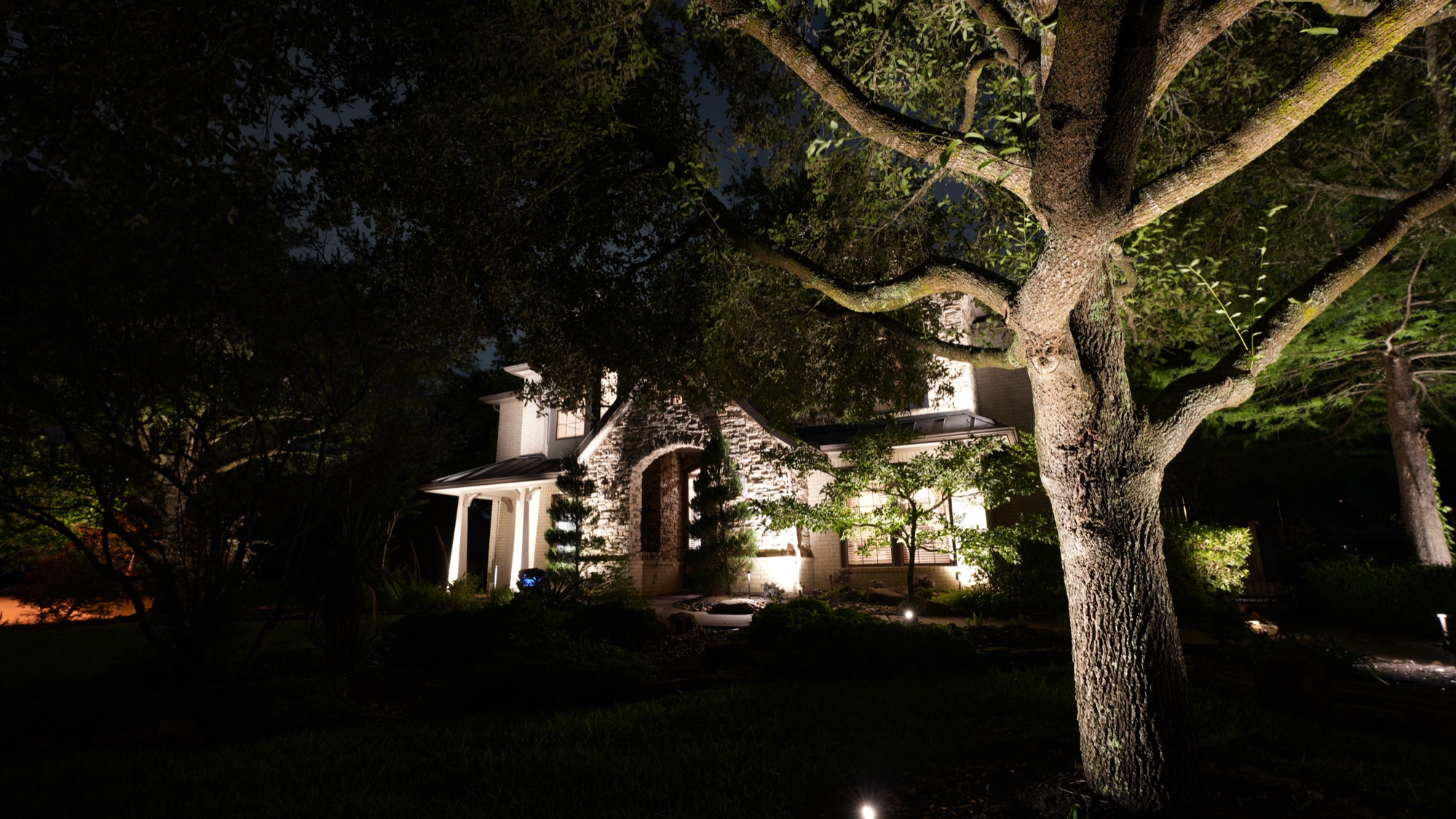
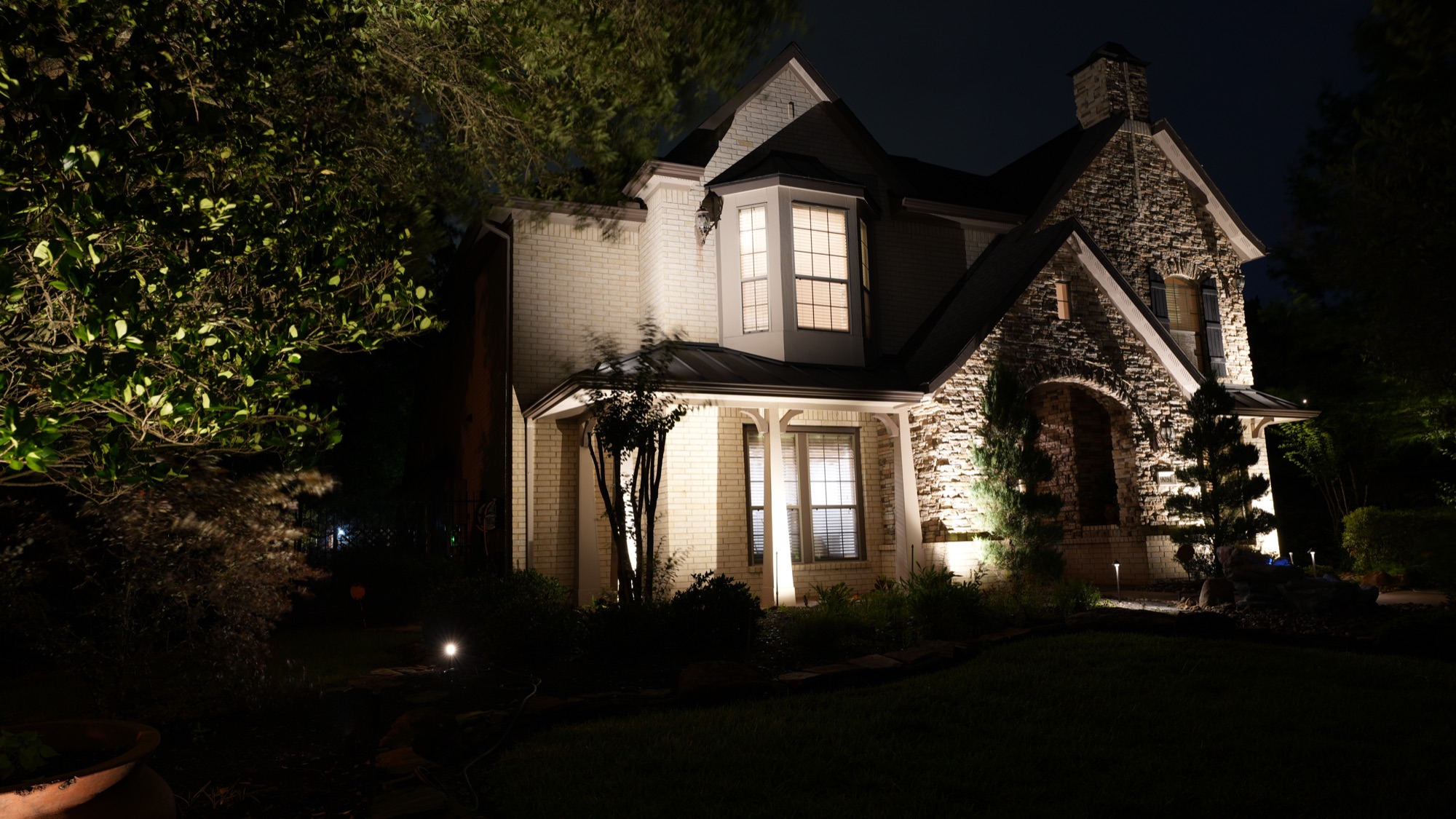
Properties with this much built-in character are where landscape lighting can do its best work. Stone and brick architecture, mature live oaks, established garden beds, a pool surrounded by planting areas. The job isn't to add light. It's to use what's already there as the framework. The trees set the heights. The facade sets the warmth. The beds set the sight lines. Yards with this kind of natural texture are the ones we'd happily light again and again.
The property already had a landscape lighting system, but it had been assembled over the years from a mix of different fixture types. Including some solar lights. Powered by a single aging transformer. The homeowner wanted to keep what they had and upgrade around it. That plan changed once we got into it.
Total system size
Install then night aiming
Lead + 2 technicians
Total project cost
Completed
Near River Plantation
Assessment first. Then a plan that changed twice.
The property had a working landscape lighting system. On paper. In practice it was a patchwork: fixtures from different eras and brands, some of them solar lights mixed in with hardwired ones, all running off a single aging transformer. We walked the full property and documented what was there before recommending anything.
After the assessment, we designed a full replacement. Remove everything. All old fixtures and cabling. But retain the owner's existing transformer as the power source for both front and back. The original scope called for over 50 fixtures to cover the front yard trees, house facade, back yard trees, pool surround, and all walkways. The homeowner reviewed it and pulled the scope back to 42 fixtures, with the downlighting we'd recommended for a moonlight effect deferred for a future phase.
The plan was to keep the original transformer. The homeowner wanted a single-zone system. One transformer, one timer, covering everything. We connected the new fixtures to it, but under a full new load the old unit ran inconsistently. It had been borderline for a while; the new system just made that clear. We recommended a new 300W transformer. They approved and we swapped it in on day two.
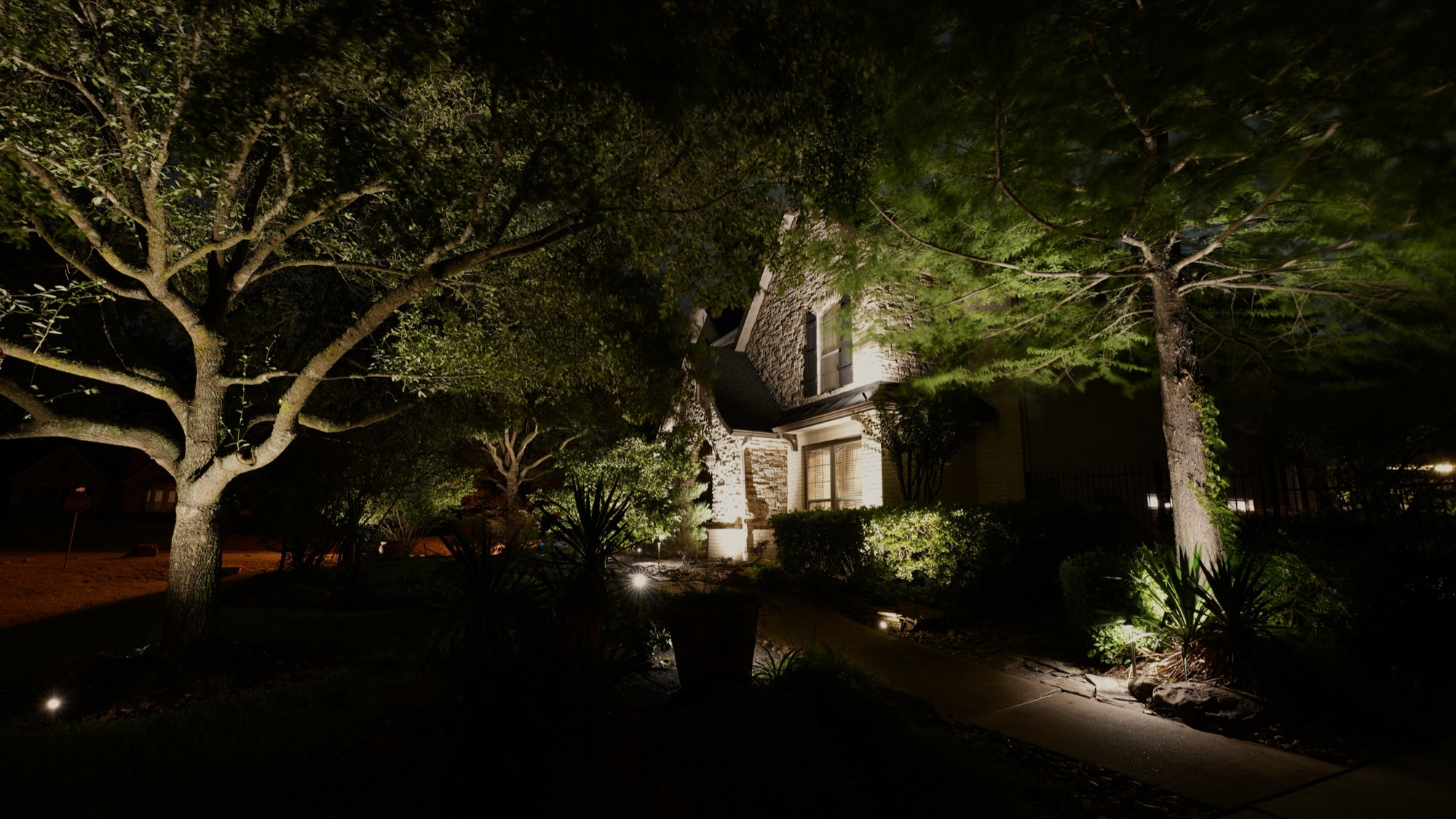
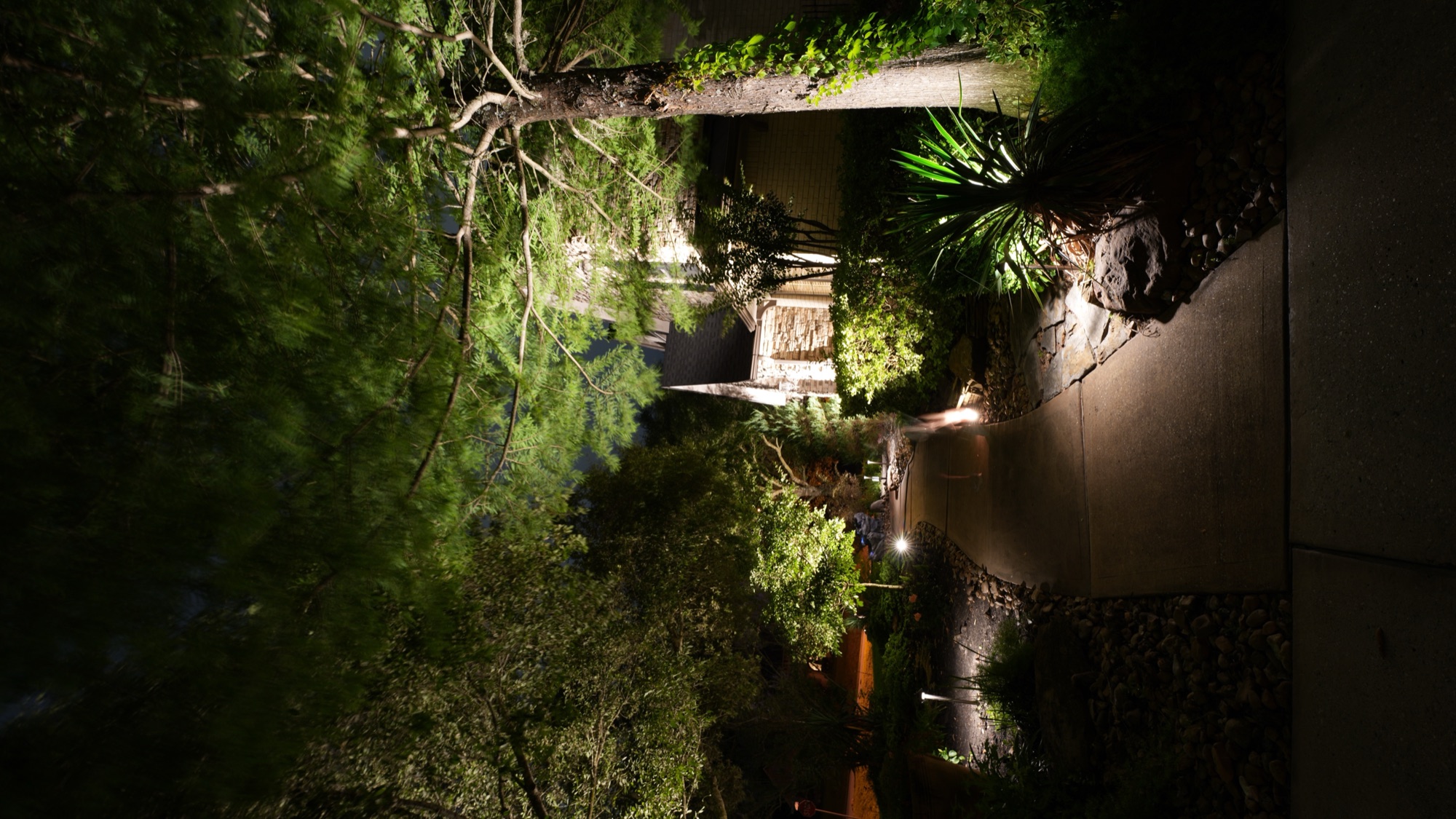
All 42 fixtures are hardwired LED. The front-yard live oaks got ground-level uplights placed to trace the canopy structure — the goal was to reveal the limb spread, not just turn the leaves green. The stone facade got spots positioned to skim the texture rather than wash the wall flat (angle and distance matter more than wattage here). Three fixtures were gutter-mounted to reach second-floor features that couldn't be lit from grade. Back yard added tree uplights and path lights around the pool deck. Beam spread, color temperature, and aim were chosen fixture by fixture for the specific job each one was doing. That's the part of the work ILLI training prepares you for.
After the 2-day installation we came back one night to aim every fixture in darkness. That's when you can actually see what's working and what isn't. We added a few fixtures during the walkthrough where coverage needed to be filled in. A smart timer was wired in so the homeowner can set schedules without touching the transformer directly.
Full breakdown.
The fixture cost reflects a mix of fixture types at an average of about $150 each. Tree uplights, house spotlights, 3 gutter-mount brackets for the upper facade, and path lights for the walkways and pool surround. All LED.
The transformer replacement was not in the original scope. The plan had been to reuse the existing unit. Once the new fixtures were connected and running, the old transformer proved too unreliable. We recommended replacement on day two, the homeowner approved, and we swapped in a new 300W unit and wired in a smart timer at the same time.
Labor covers full old system removal, the 2-day installation, and a separate night aiming session after installation. When you can actually see what each fixture is doing and make final adjustments.
Our recommendations for the next phase.
Currently the entire system runs off a single transformer. Adding a second unit would create independent front and back zones, each with its own smart timer. That means separate schedules, the ability to dim or shut down one area without affecting the other, and a cleaner load balance. If one transformer ever needs attention, only half the system goes down.
Several trees on the property were not included in the final 42-fixture scope. The homeowner pulled back from the original 50+ fixture design. The unlit trees are noticeable once the rest of the yard is on. Adding fixtures to those remaining oaks would complete the system and even out the coverage across both the front and back yard.
We recommended downlighting during the original design. Fixtures mounted high in the trees, aimed downward to cast soft dappled light on the ground. The homeowner deferred it. It's the addition that would make the biggest visual difference, especially in the front yard where the live oak canopy is strongest. A few well-placed downlights around the pool area in the back yard would change how the whole space feels at night.
Every installation includes two complimentary maintenance visits. The first at around the 6-month mark, the second 6 months after that. Each visit covers lens cleaning, re-aiming any fixtures that have shifted, trimming vegetation that's started blocking aim points, and a full electrical check. After those first two visits, we recommend staying on at least an annual plan. Twice a year is better. Landscape lighting systems drift over time and catching a loose connection or a shifted fixture early keeps the system performing the way it looked the night it was installed.
Related to this project.
The landscape lighting service this install came from, plus the guides on what to budget and how to handle an older system that's failing.
Ready to talk about
your property?
Tell us what you've got and we'll walk the site with you.